

Cell Protection
Aerogel barriers and insulation films prevent thermal runaway propagation between cells.
From cell-to-cell barriers to rack-level sealing, MIWAKEE provides complete thermal interface solutions for BESS and HESS systems. Ensure safety, longevity, and performance across all storage architectures.
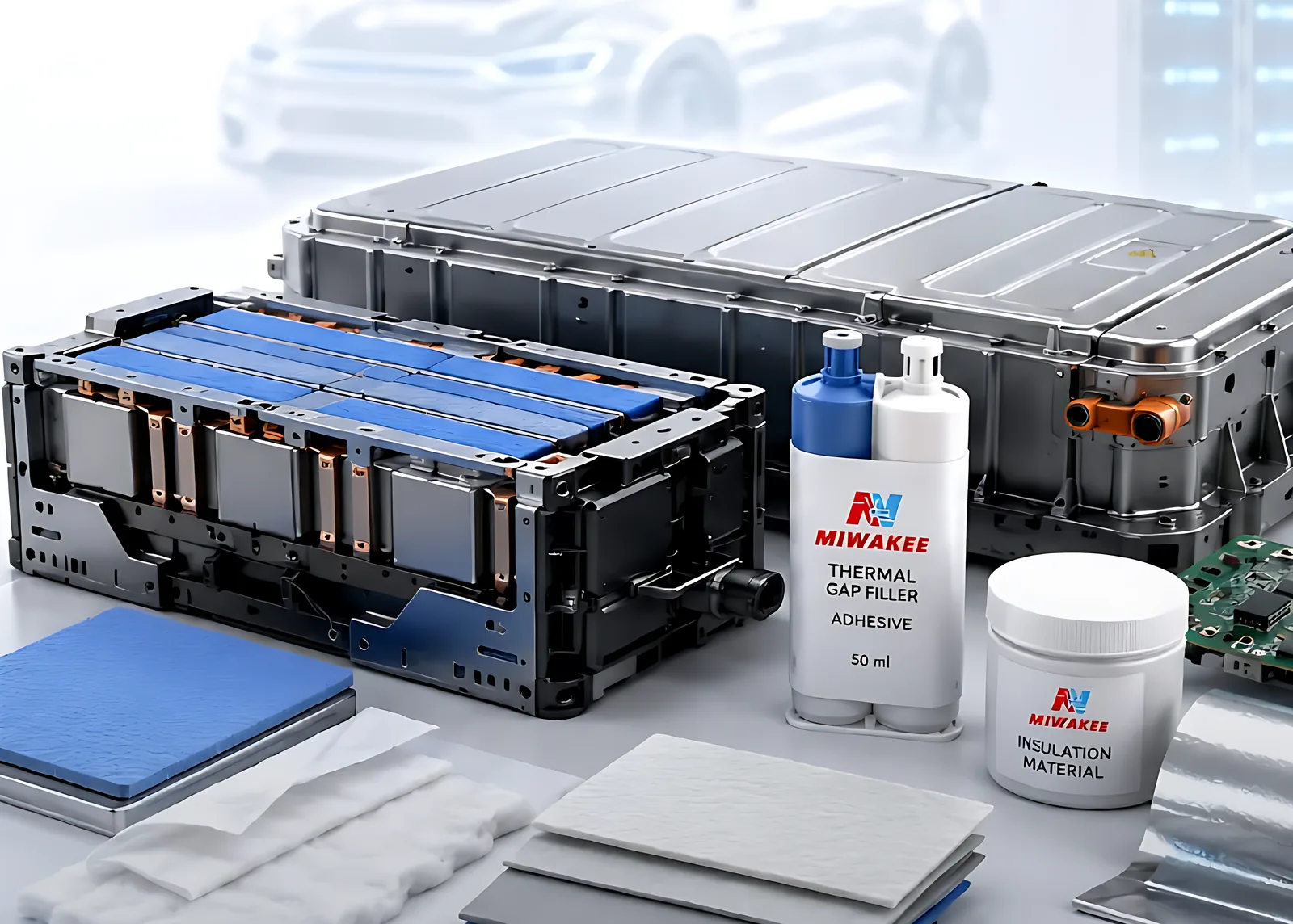
Comprehensive material coverage from cell level to system integration.
Aerogel barriers and insulation films prevent thermal runaway propagation between cells.
Dielectric films and potting compounds ensure safe operation in high-voltage environments.
Materials engineered for -40°C to 85°C operational range with stable performance.
From individual cells to container-level solutions, complete thermal management coverage.
Each material is chosen against the interface it actually touches — the metal, the board, the busbar and the enclosure.
Pads, gap fillers and TIM layers manage compression, gap variation and heat flow at the cooling interface.
Thermal interface optionsPotting, coating, local TIM and sealing protect boards, sensors and connectors from heat, moisture and vibration.
Electronics protectionInsulation film, dielectric parts and thermal interface for high-voltage and power-conversion areas.
Insulation & dielectricSix functional families cover thermal, insulation, sealing, bonding and protection needs across the BESS.
Material selection reviewed by system level — the same family may serve several levels.
Quick answers to the interface questions we hear most.
A thermal pad or gap filler sized to the real gap and compression.
From the measured gap range plus the target compression.
Dispensed fillers conform better to uneven, larger gaps.
Some films and pads do, but check dielectric strength and thickness.
Thermal, dielectric, mechanical and compliance data, plus process guidance.
Send the heat load, gap and environmental class — our application engineers will recommend the material and format for that position.
Cookies on this site
Essential cookies keep the site and its forms working. Optional analytics cookies help us understand which pages engineers actually use. You can accept or decline the optional ones — every page works either way.